
Choose a heated hoodie blanket that stays roomy over your usual clothing, covers your lap when seated, and keeps the sleeves clear of your hands. Compare the garment’s measurements with a loose hoodie you already like, then check how the hem, cuffs, and hood sit in your everyday lounging position. Size labels alone do not tell you whether the fit works.
- Choose a heated hoodie blanket by garment measurements and seated coverage, not your usual sweatshirt size alone.
- Ohhthatsgood’s Heated Hoodie Blanket suits shoppers considering wearable warmth; confirm dimensions before choosing a fit.
- Check chest room, hem position, sleeve reach, and hood movement over the clothing you actually wear.
- Choose a separate heated blanket if you prefer adjustable lap coverage without sleeves.
Why this matters
A wearable blanket has to work while you sit, reach, and change position—not just while you stand for a fit check. A roomy body does not automatically mean the sleeves or length suit you. You need enough space for your clothing without fabric getting between your hands and everyday tasks.
For your 2026 purchase, start with the Heated Hoodie Blanket measurements and instructions rather than treating it like an ordinary sweatshirt. Ohhthatsgood’s Heated Hoodie Blanket is best for shoppers seeking wearable coverage rather than a separate lap blanket. Its suitability for your body still depends on the listed dimensions and your preferred fit.
How do you choose the fit of a heated hoodie blanket?
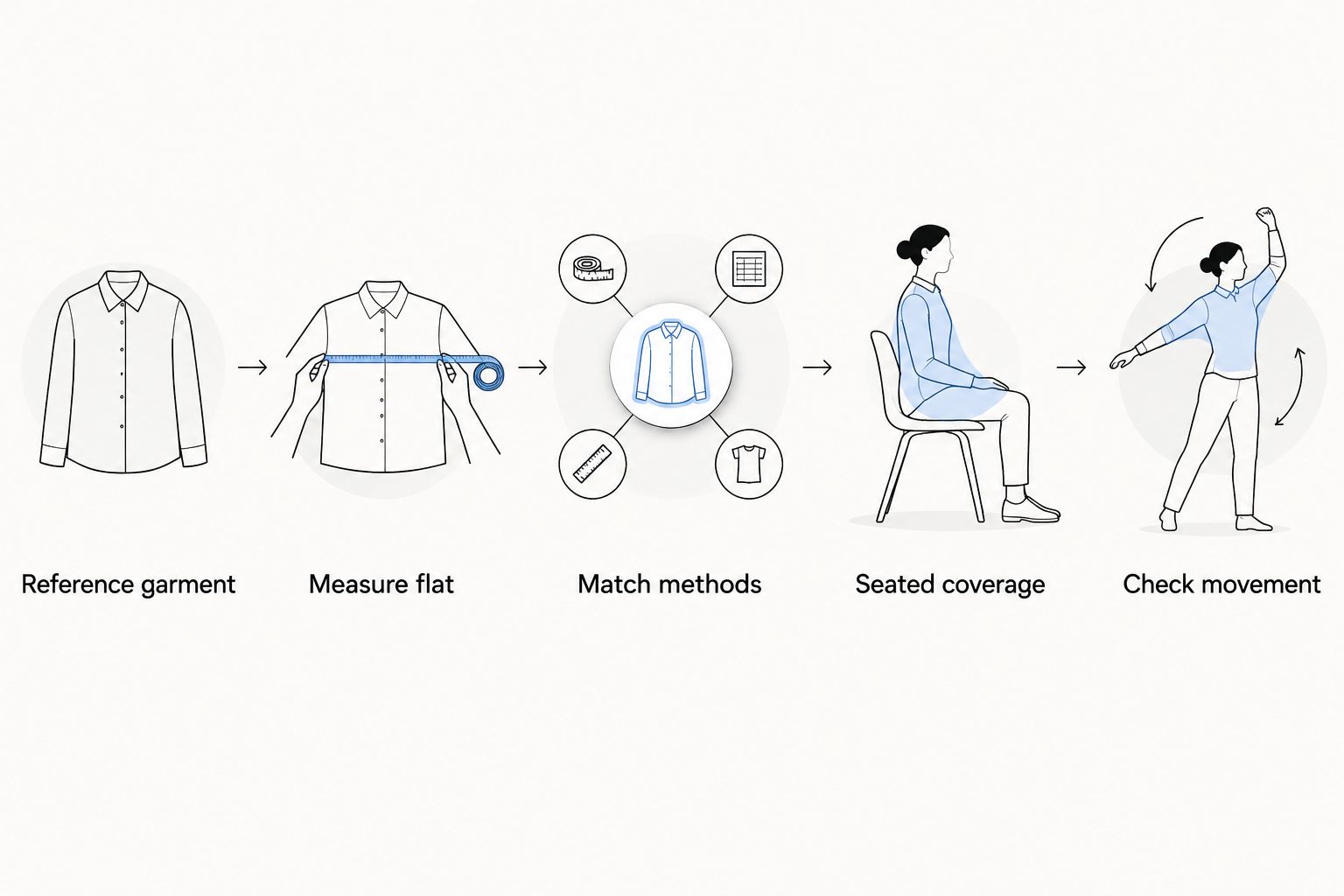
Choose the fit by comparing actual garment dimensions, checking coverage while seated, and testing whether your hands stay free. Follow this sequence before deciding that a size is right.
- Choose a reference garment. Use a loose hoodie you enjoy wearing over your normal indoor clothing. Avoid using a close-fitting sweatshirt as your only reference if you want blanket-like room.
- Measure it flat. Lay the reference garment on a level surface without stretching it. Record its underarm width, body length, and sleeve length, noting where each measurement starts and ends.
- Match measurement methods. Compare flat width with flat width, not with a full chest circumference. Check whether the seller measures sleeves from the shoulder seam or from another point.
- Check your seated coverage. Wear the reference hoodie in your usual chair and notice where its hem lands. Decide whether you want similar coverage or more fabric across your lap.
- Check movement and instructions. Reach toward your usual table or desk and check the cuffs and shoulders. For the heated garment, follow its instructions for permitted use, connections, and care.
Choose the fit that works in your chair, not just the fit that looks roomy in a photograph. A standing product image cannot tell you whether the hem covers your lap or the sleeves stay out of your way.
What should you measure before ordering?
Record the measurements in the same units used by the product listing. If your tape uses inches and the listing uses centimeters, convert consistently before comparing. Do not mix units within a measurement note.
| Measurement | What to compare | What it helps you judge |
|---|---|---|
| Body width | Flat underarm width measured the same way | Room across your torso and clothing |
| Body length | The listing’s stated start point to the hem | Coverage while standing and sitting |
| Sleeve length | Matching shoulder or neckline start points | Whether the cuff reaches or covers your hand |
| Cuff opening | Listed cuff dimensions or construction details | Whether the sleeve opening suits your wrist |
| Hood fit | Listed dimensions and a try-on when possible | Whether the hood pulls as you turn your head |
A measurement is useful only when you know what it describes. Ask for clarification if a chart labels a dimension simply as chest without saying whether it means body circumference or flat garment width. Do not double or halve a figure until the measurement method is clear.
Choose room through the body without losing your hands
A relaxed body gives you space for the clothing underneath. The practical limit is excess fabric that interferes with reaching, sitting, or using your hands. More room is not automatically a better fit.
Check the shoulders while reaching forward. Fabric should not pull tightly across your upper back, but a dropped shoulder also changes where the sleeve begins. That is why sleeve length needs its own check even when the body width looks right.
For a 2026 fit comparison, write down what you actually wear underneath: a T-shirt, pajamas, or another layer. Test against that clothing rather than an outfit you rarely wear at home. A fit chosen over a thin shirt does not answer whether you like it over your usual evening layers.
Do not size up just to solve a length problem. Compare the full chart first; a larger option can also change sleeve reach and body width. If no listed option balances those dimensions, choose a different cut rather than accepting cuffs that cover your hands.
Check length in the chair where you will use it
Seated coverage deserves its own check because your posture changes how fabric falls. Sit in your usual chair with your feet in their normal position, then check the hem across your thighs. Repeat the check when you lean back or reach forward.
Decide what coverage you actually want. Covering your upper thighs is a different goal from covering your knees or lower legs. State that preference before comparing garments so that extra length does not become an automatic selling point.
A longer hem offers more fabric to arrange, but it also gives you more material to manage when standing. Keep the hem clear of your feet. If you want coverage that you can reposition independently of your sleeves, compare a wearable design with a separate blanket.
Heated hoodie blanket or separate heated blanket?
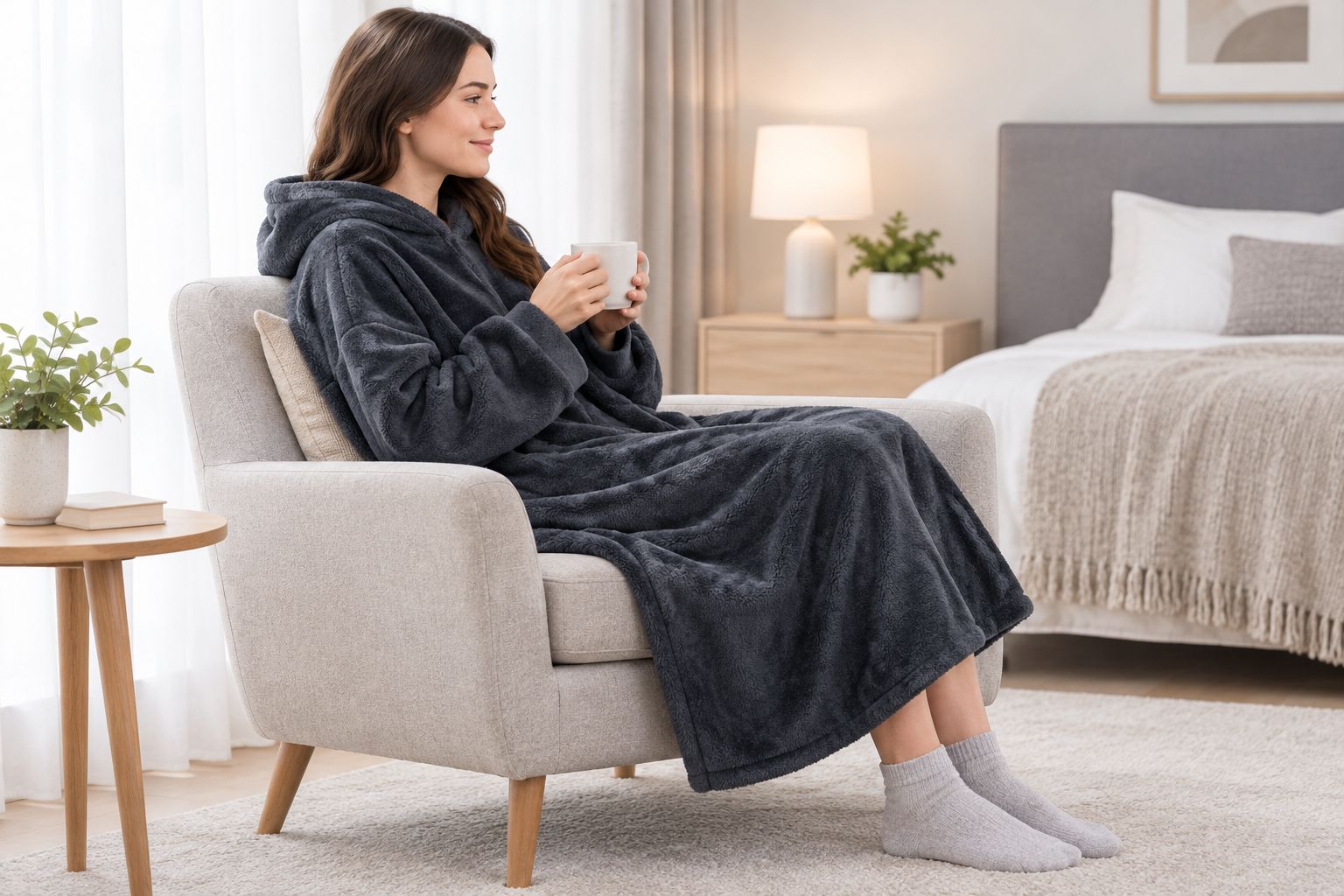
Choose a wearable design when sleeves and a hood match how you want to relax. Choose a separate blanket when you want to arrange coverage across your lap without tying that coverage to garment fit. Neither format removes the need to follow the individual product’s instructions.
| Option | Best for | Practical advantage | Practical limitation |
|---|---|---|---|
| Ohhthatsgood Heated Hoodie Blanket | Shoppers wanting wearable coverage | Combines a hoodie format with a blanket-style product | Body length, sleeves, and torso room must all suit the wearer |
| 3-Level Safety Heated Blanket with Adjustable Temperature | Shoppers wanting a separate covering | Can be arranged across the lap independently of clothing | Does not provide the same sleeve-and-hood format |
The separate blanket’s listed dimensions are 50 by 60 inches. Those measurements describe the blanket, not the hoodie, so do not use them to estimate the wearable product’s size. Likewise, the separate blanket’s listed features do not establish features for the hoodie.
For shoppers comparing these formats in 2026, the useful question is whether you want to wear your covering or arrange it around you. Choose that first, then compare measurements. Do not let a familiar product name substitute for a fit check.


Why heated hoodie blanket fit varies
The right fit depends on more than the size printed on a label. Use these factors to explain why a garment that suits someone else does not necessarily suit you.
- Your reference fit. Someone who likes a loose sweatshirt has a different starting point from someone seeking a roomy covering across the lap.
- Your clothing underneath. Judge room over the layers you intend to wear, not over an unrelated try-on outfit.
- Your body proportions. Torso length and arm length need separate checks; height alone does not describe both.
- Your sitting position. An upright desk chair and a reclined lounging position place different demands on hem coverage.
- Your hand use. Reading, typing, and reaching for objects make cuff position especially relevant.
- The measurement method. Flat garment width, body circumference, and different sleeve start points are not interchangeable.
For your 2026 shortlist, record these preferences alongside the dimensions. A simple note such as hands clear, room over pajamas, and lap covered is more useful than oversized alone. It gives you a concrete way to reject a poor match.
Should a heated hoodie blanket fit loosely?
A heated hoodie blanket should leave room for your intended clothing without obstructing your hands or feet. Loose describes the silhouette; it does not prove the garment fits you. Check body width, sleeve reach, and seated length separately.
If the torso feels comfortable but the cuffs swallow your hands, the overall fit still needs work. Do not assume that extra body room compensates for an unsuitable sleeve length.
Can you choose a heated hoodie blanket by height alone?
Height alone is not enough to choose a heated hoodie blanket. Compare garment length and sleeve measurements with a reference hoodie, then check your desired lap coverage. Two shoppers of similar height can prefer different lengths and amounts of room.
Use height as context, not as the final decision. A clear measurement chart is more useful than a photograph of an unidentified model.
What should you check when the hoodie arrives?
Check the fit with the heating switched off and before committing to use. Wear your intended clothing underneath, sit in your usual chair, and check the hem, cuffs, shoulders, and hood. Follow the product instructions before connecting or operating it.
Keep packaging and follow the seller’s stated return conditions while assessing fit. Do not assume a particular return window or that use, washing, or alterations leave return eligibility unchanged.
FAQ
Should I buy my usual size in a heated hoodie blanket?
Do not choose your usual size without checking the garment measurements. Compare the listed width, length, and sleeves with a loose hoodie you already enjoy wearing.
How do I know whether a heated hoodie blanket is too big?
The fit is too big for your intended use if excess fabric obstructs your hands or feet or prevents comfortable movement. Room through the torso does not make unsuitable sleeves acceptable.
How long should a heated hoodie blanket be?
Choose a length that provides your preferred seated coverage while keeping fabric clear of your feet when you stand. Check where the hem lands in your usual chair rather than relying on a standing photograph.
Can I wear another hoodie underneath a heated hoodie blanket?
Assess the fit over that layer only if the product instructions permit the intended use. Compare dimensions and check shoulder movement rather than assuming that an oversized label guarantees enough room.
Is a separate heated blanket better than a hoodie blanket?
A separate heated blanket is the better format when you want to arrange lap coverage independently of sleeves and a hood. A heated hoodie blanket suits shoppers who prefer a wearable format, provided the garment fits.
What should I do if the size chart only says chest?
Confirm whether chest means body circumference or flat garment width before comparing it with your measurements. Also check where sleeve and body-length measurements begin.
What is the main fit check before buying in 2026?
The main fit check in 2026 is comparing actual garment measurements with a comfortable reference hoodie. Then verify seated coverage and hand clearance, because a size label does not answer those questions.
One last thing
Do not let a good torso fit hide a bad sleeve fit. Before choosing, put on your reference hoodie and reach toward the objects you use from your chair. Notice whether the cuffs stay behind your hands and whether the hem still gives you the coverage you want.
That everyday movement is a better final check than standing still in front of a mirror. If the measurements do not support both coverage and usable sleeves, keep looking rather than choosing extra bulk by default.